“The first aim of the prepared environment is, as far as it is possible, to render the growing child independent of the adult.”
MARIA MONTESSORI
Classroom Preparation: Setting the Stage for Independent Learning
In Montessori education, the environment is much more than a classroom. It is a carefully prepared space that encourages independence, curiosity, and concentration. Every detail in the classroom has a purpose, designed to support the child’s natural development.
Order and Accessibility
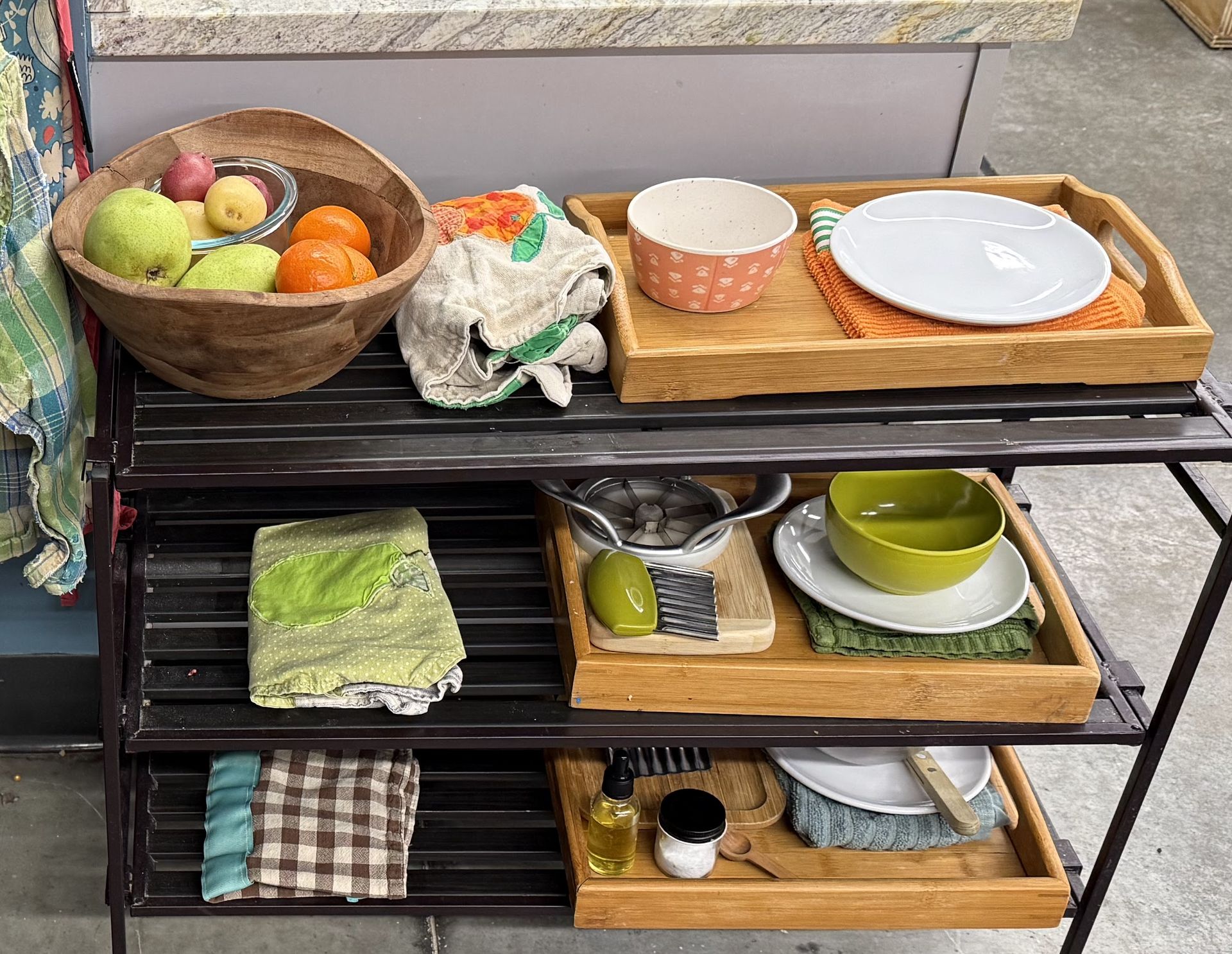
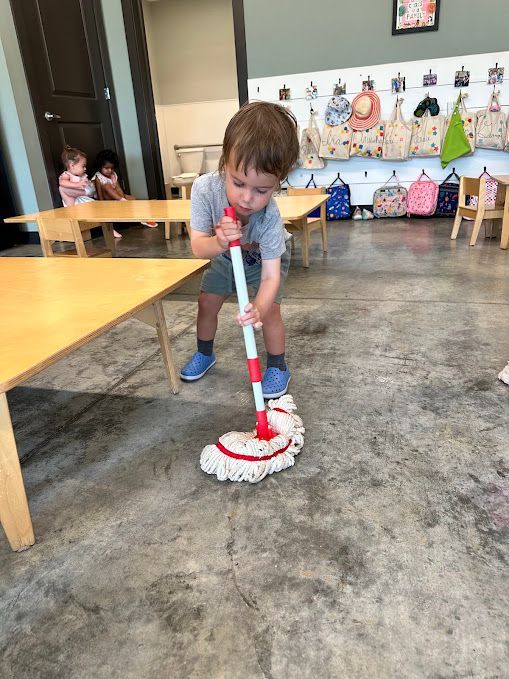
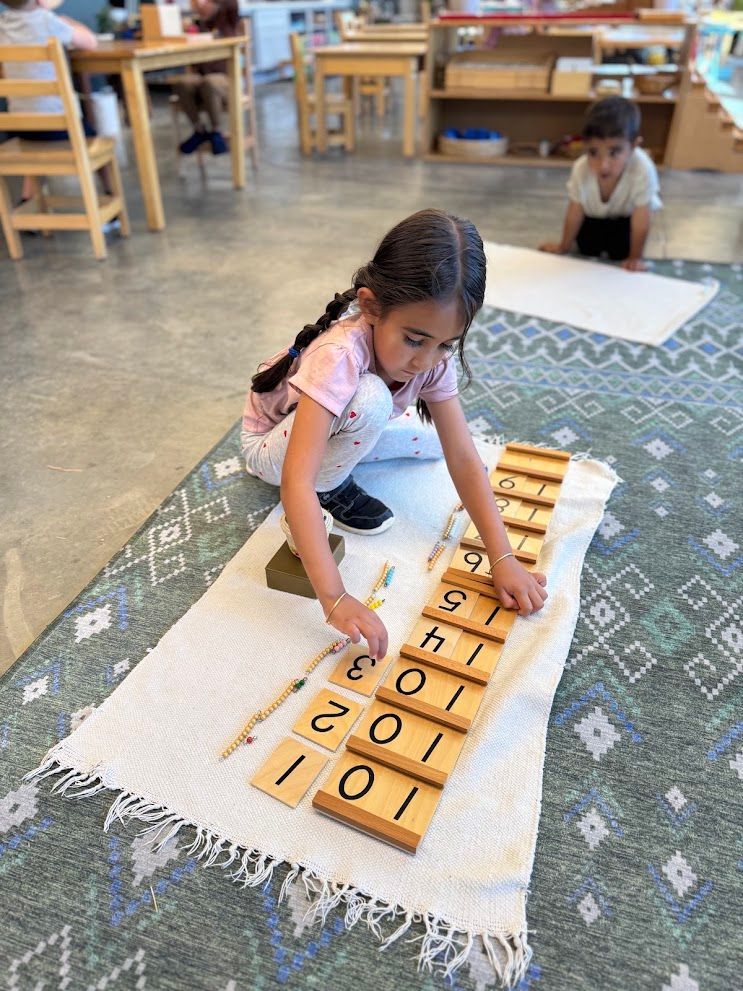
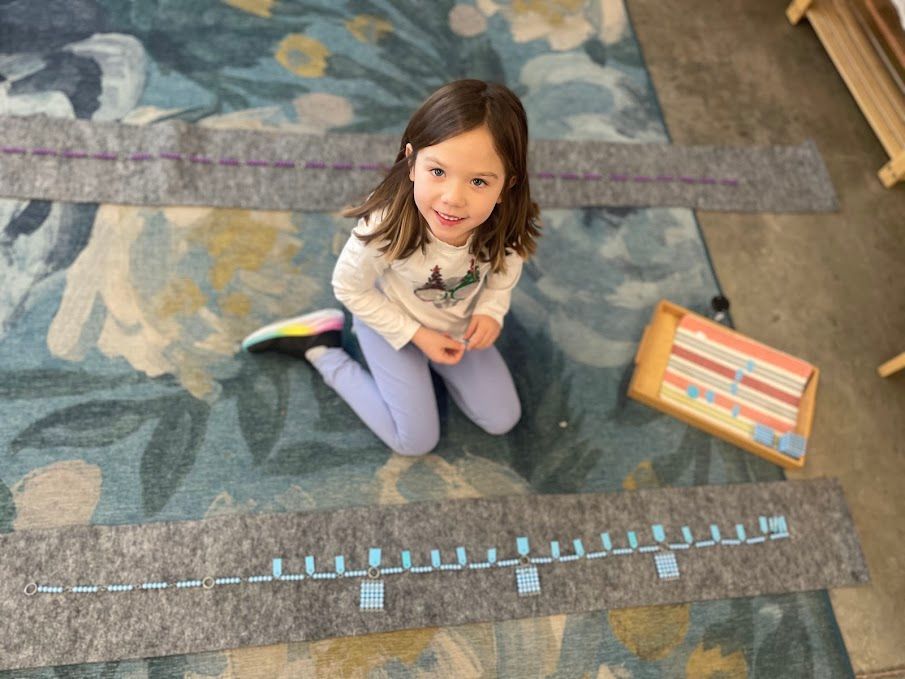
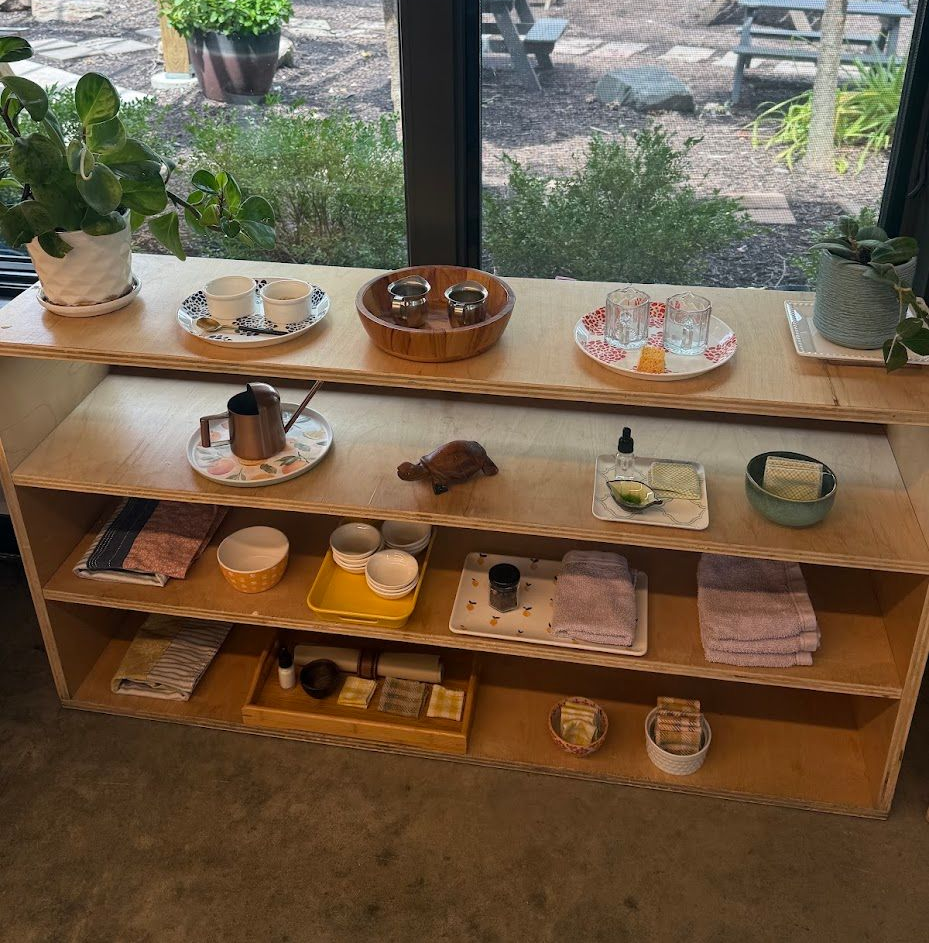
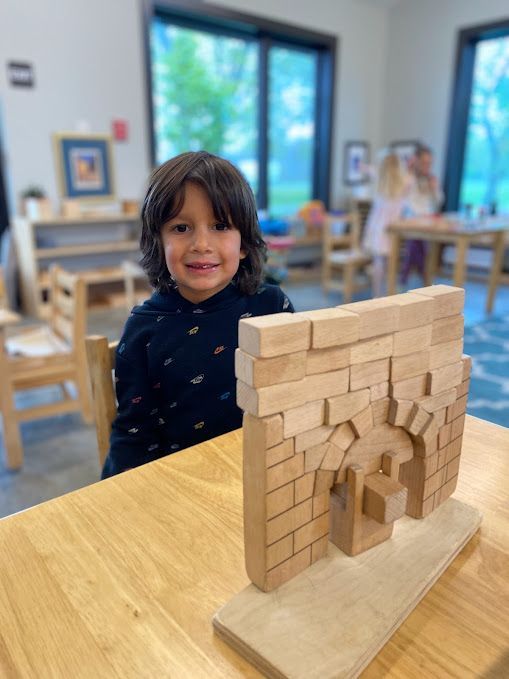
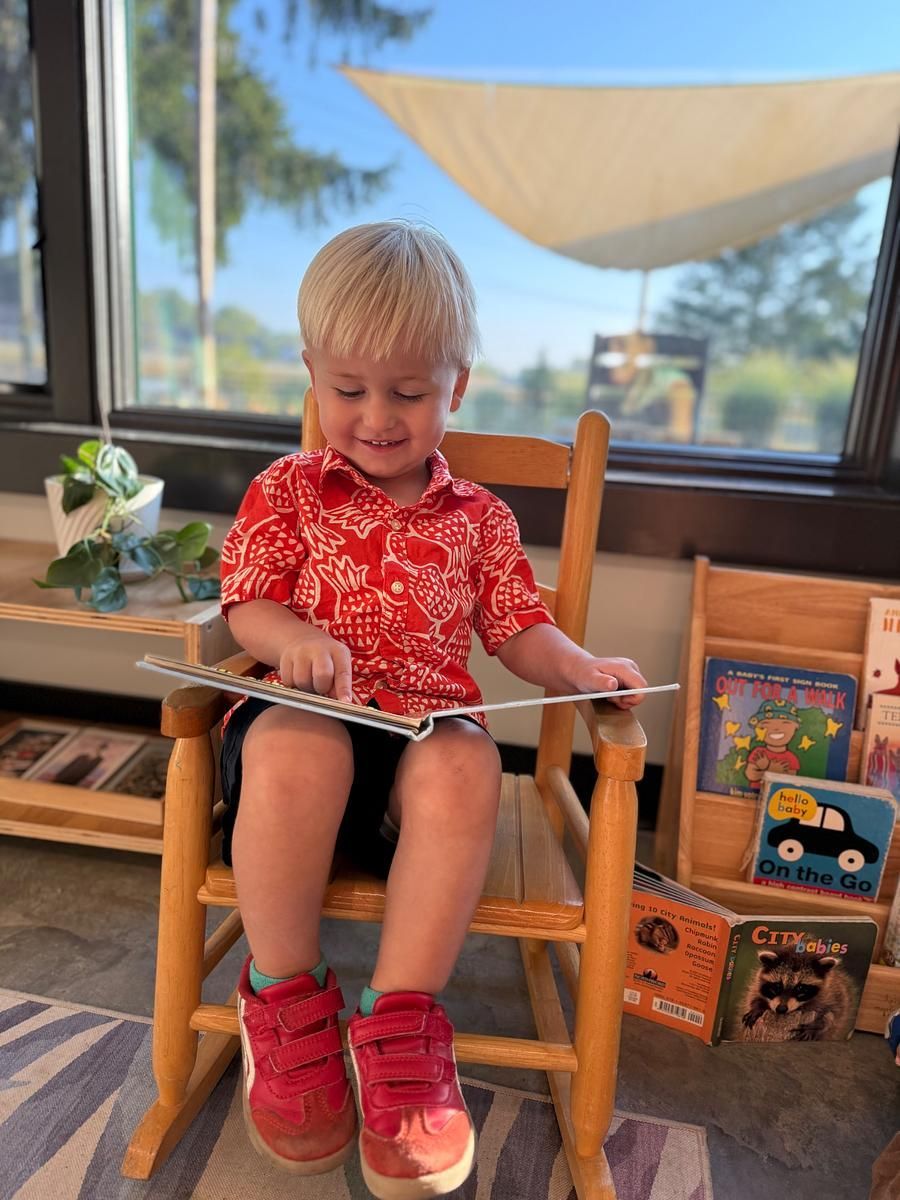
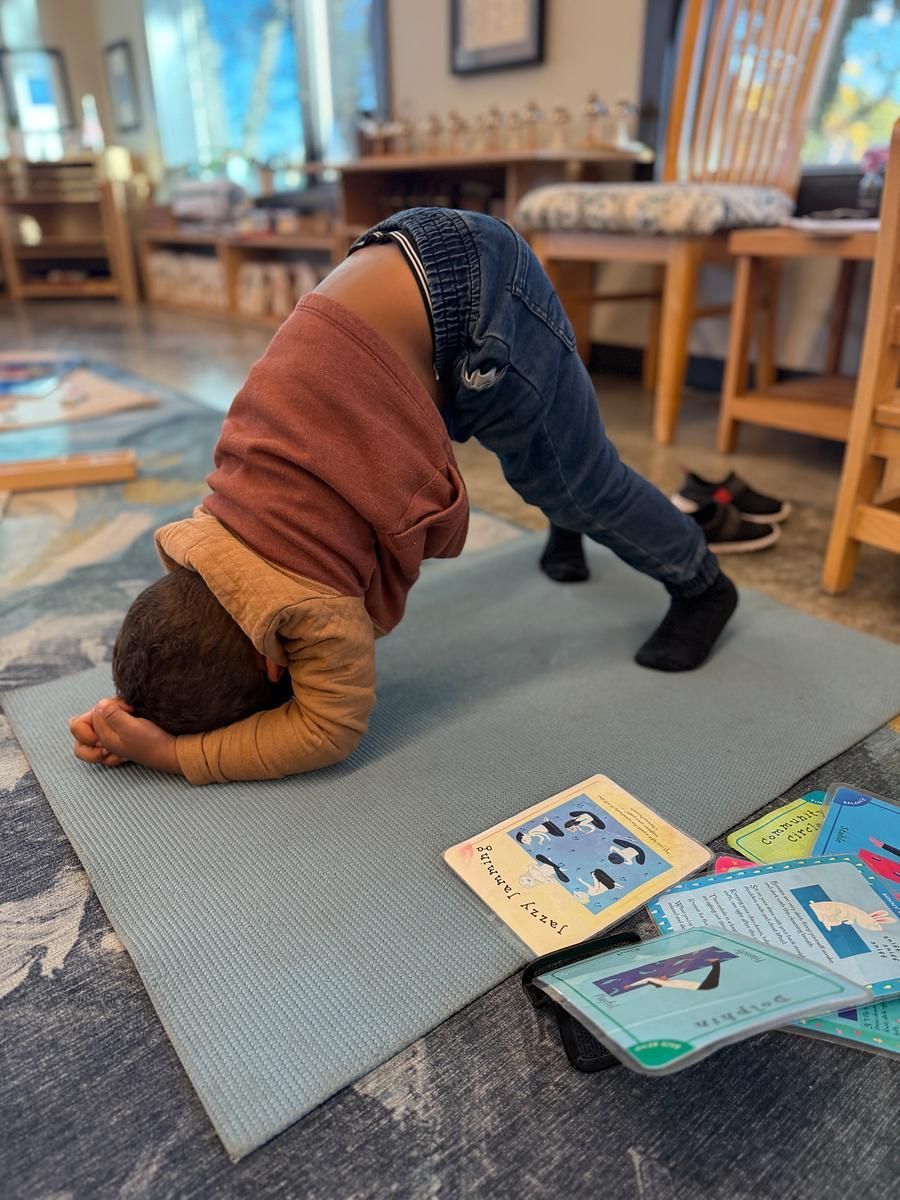
A prepared classroom is organized, orderly, and inviting. Materials are arranged so that children can access them independently and are sequenced in order of progression. Everything has a place, from shelves and trays to materials and books. The classroom is designed with the child’s size in mind. Tools are within reach and photos displayed on the walls allow for the youngest child to gaze at them with ease. This order helps children understand structure, develop responsibility, and focus on purposeful work.
Respecting the Child’s Work
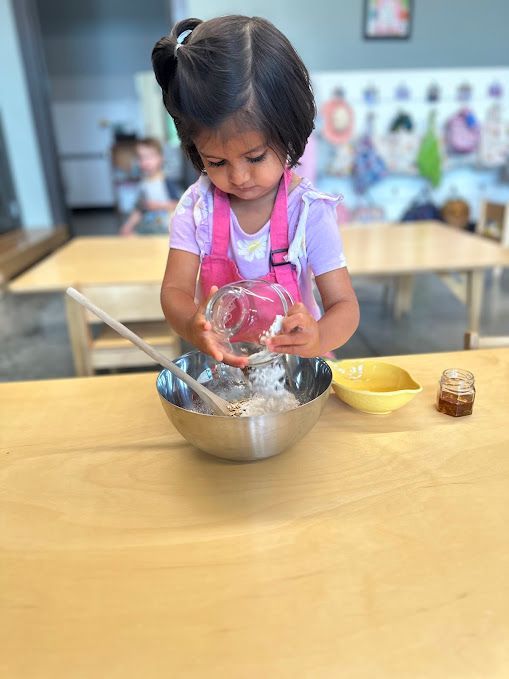
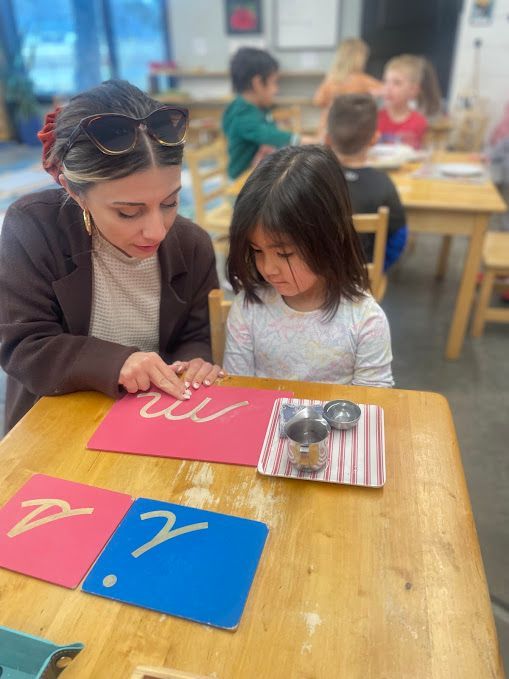
A key element of classroom preparation is creating an environment where children feel respected and free to explore. The adult’s role is to observe and guide, rather than intervene unnecessarily. Tables are strategically placed around the room offering some a chance to socialize and enjoy others while working and some to focus and concentrate. Others allow for work nearby windows where the child is free to gaze outdoors. Shelves are placed in order and arranged for a flow of the classroom with minimal blinders to the adult observing. By arranging the classroom to support independent activity, children develop confidence, concentration, and a love of learning.
Beauty and Calm
Children thrive in spaces that are calm, orderly, and aesthetically pleasing. Natural light, plants, child-sized furniture, and materials arranged neatly help children feel safe and inspired to focus. A classroom that is inviting and intentional signals to children that their work is valued and meaningful.
The Power of Observation
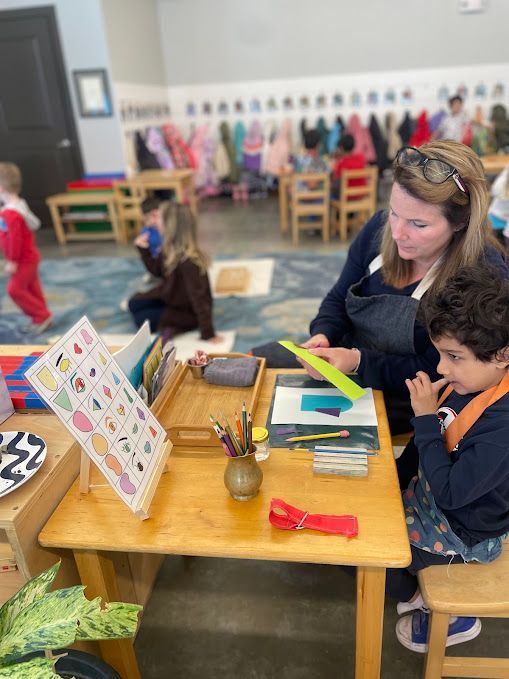
A prepared environment allows the Montessori guide to observe without interrupting, understanding each child’s needs and interests. Observation informs how the teacher introduces new materials, adjusts the environment, and supports each child’s individual growth.
A thoughtfully prepared classroom is more than a space. It is a living environment that invites children to explore, discover, and develop at their own pace. By creating a setting that encourages independence, focus, and curiosity, we give children the tools and freedom to become confident, capable learners.