“The senses, being explorers of the world, open the way to knowledge.”
MARIA MONTESSORI
Exploring the Geometric Cabinet
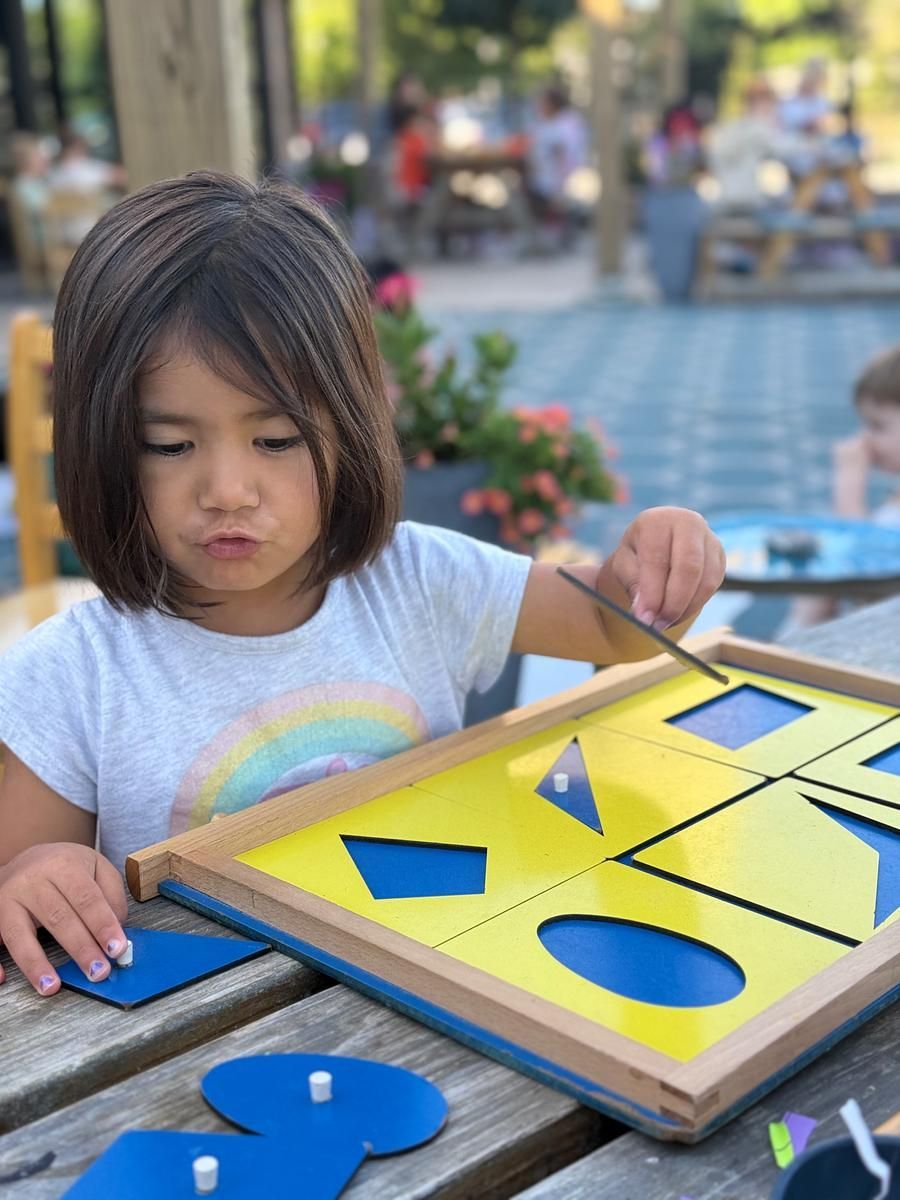
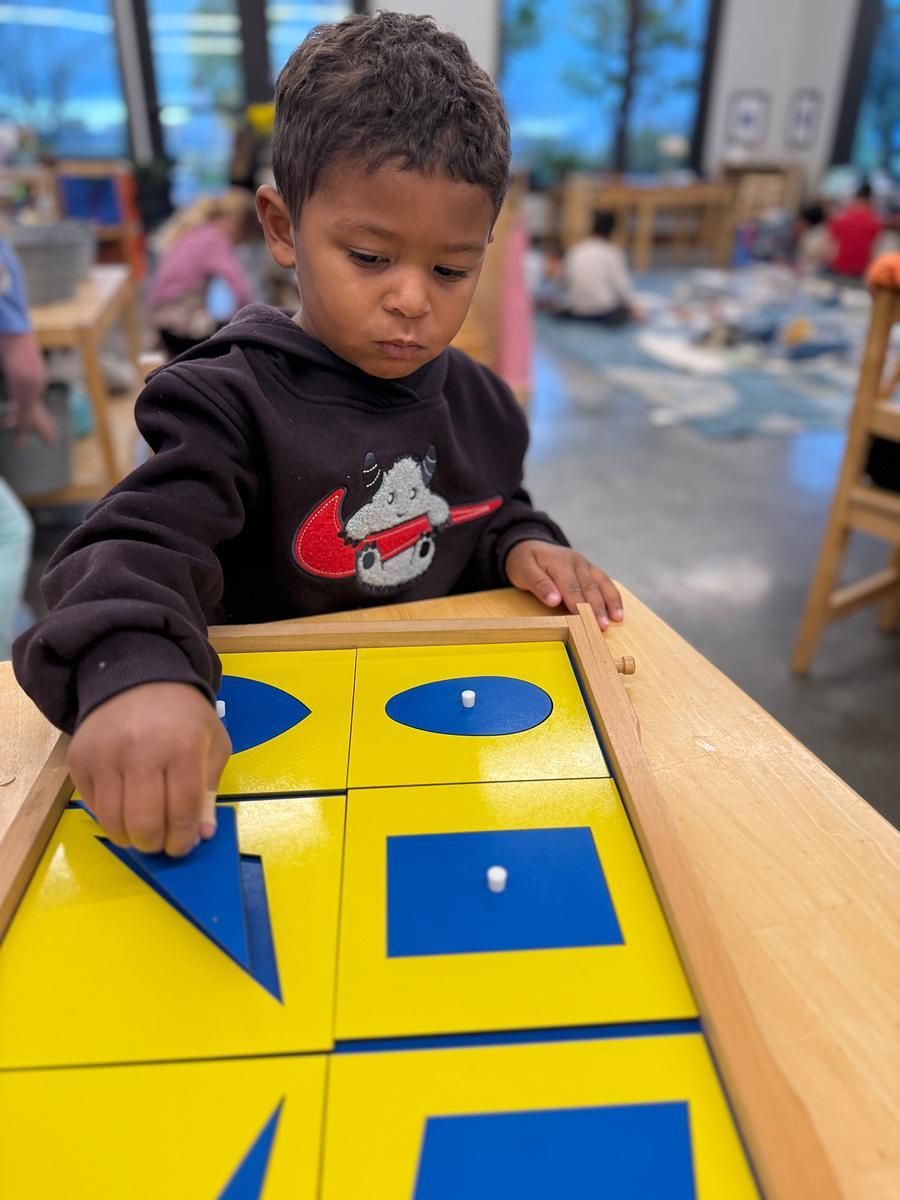
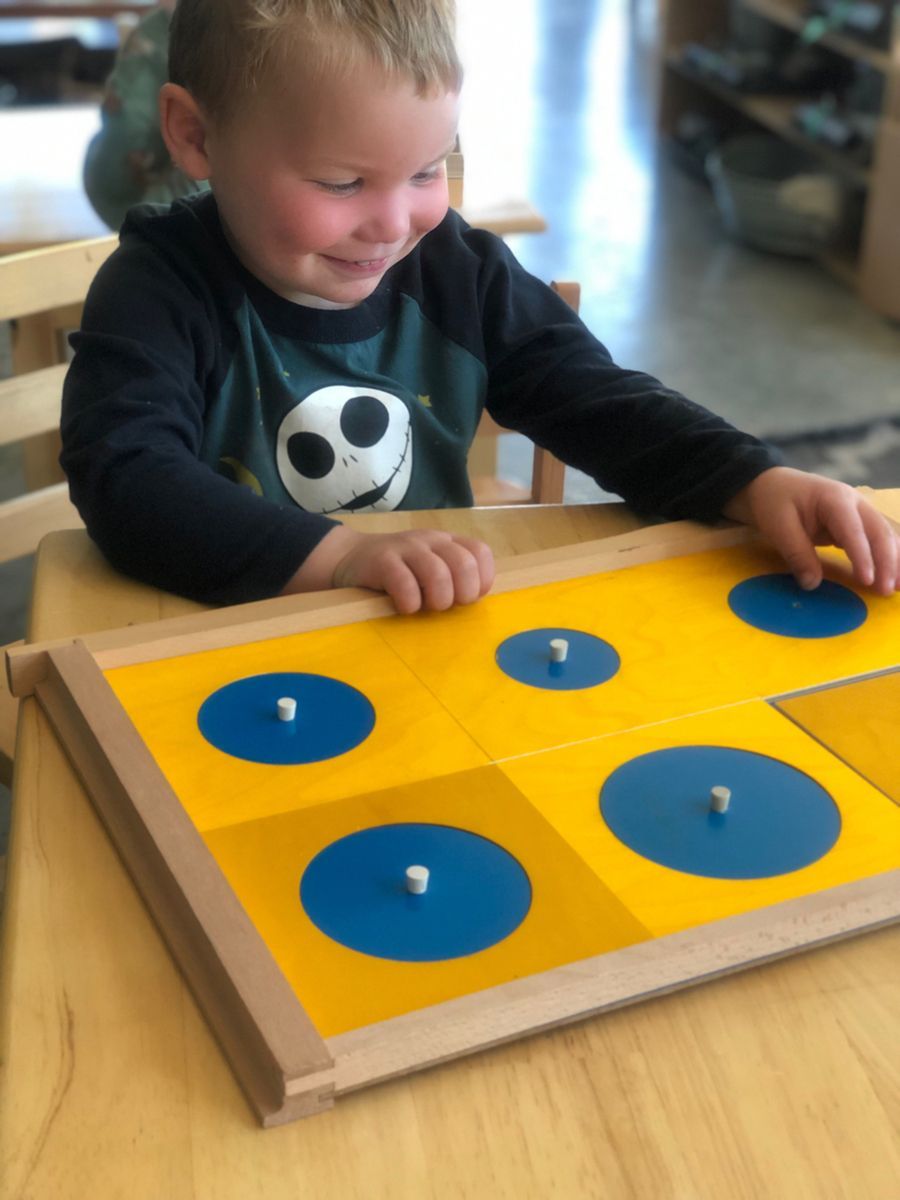
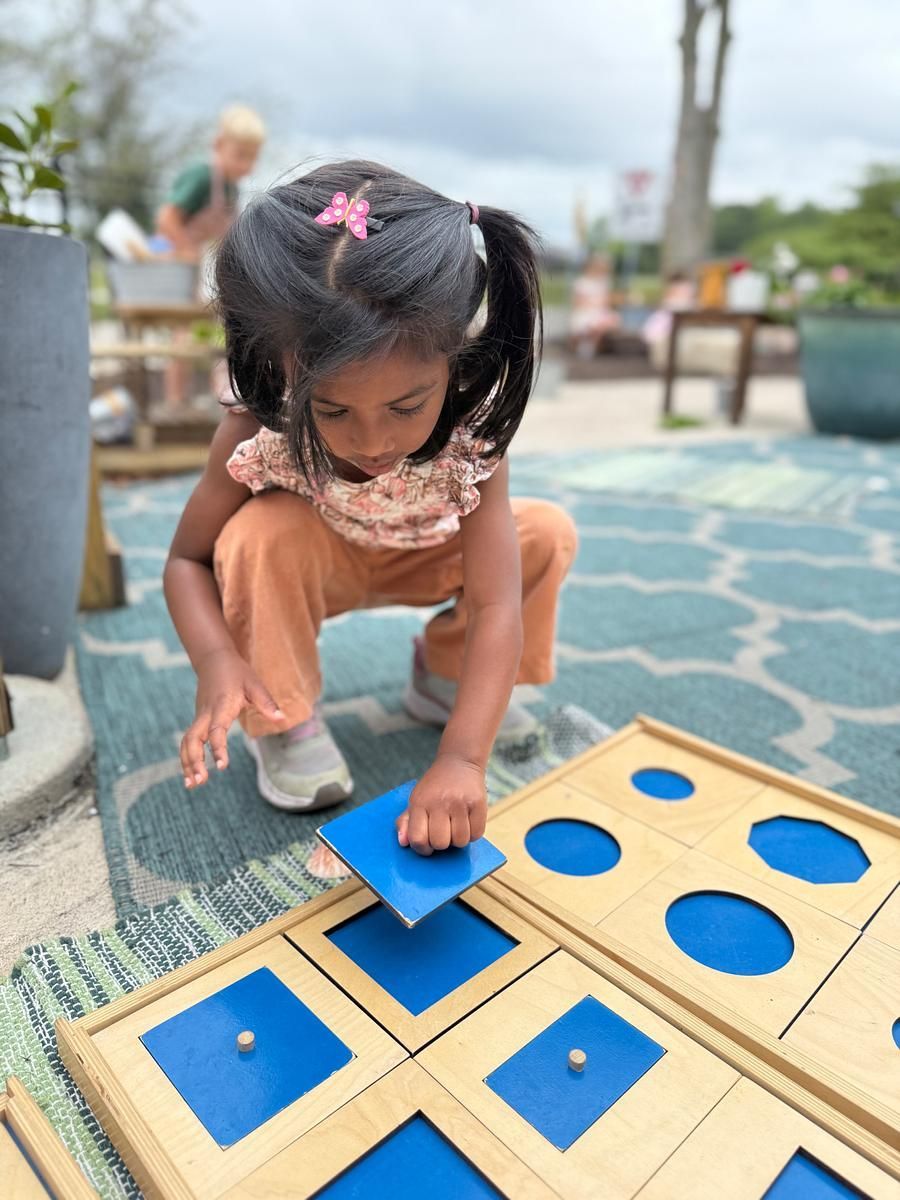
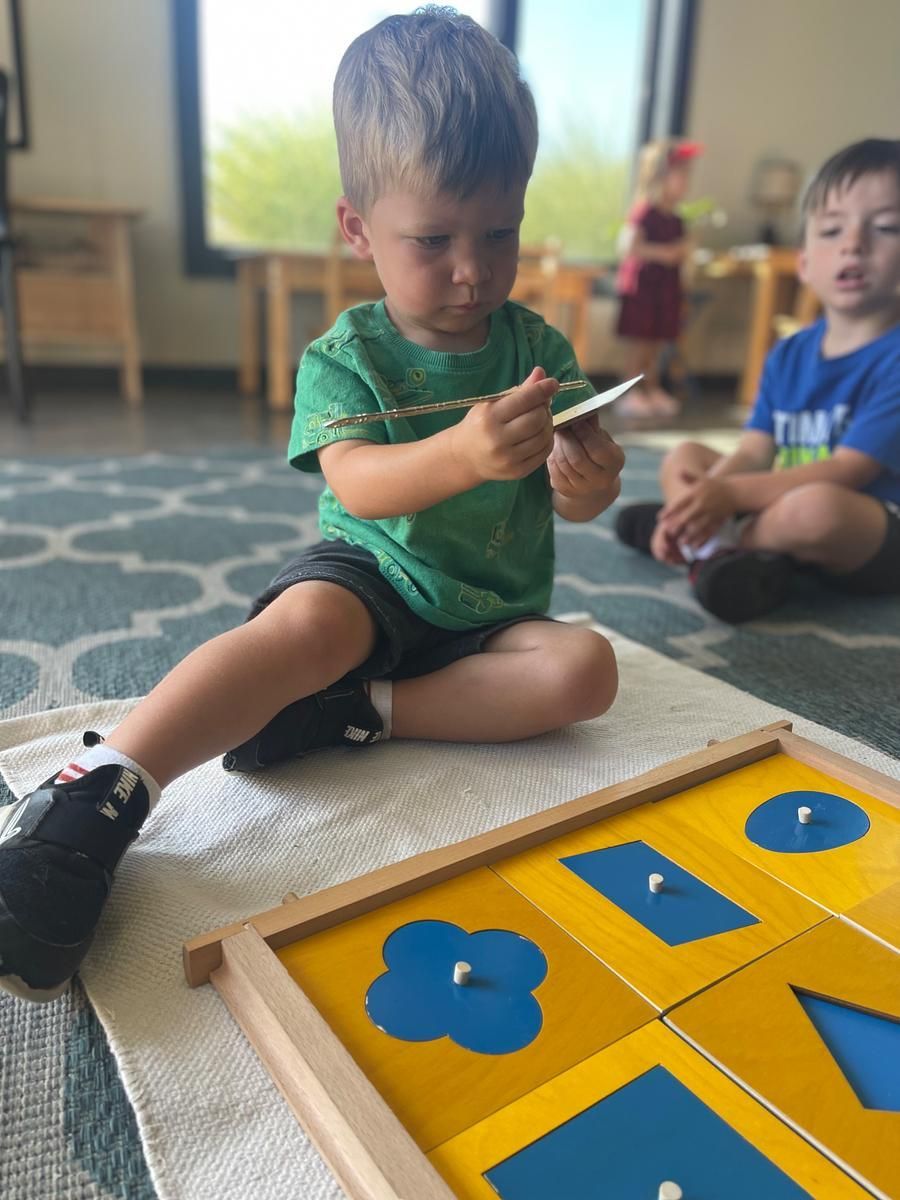
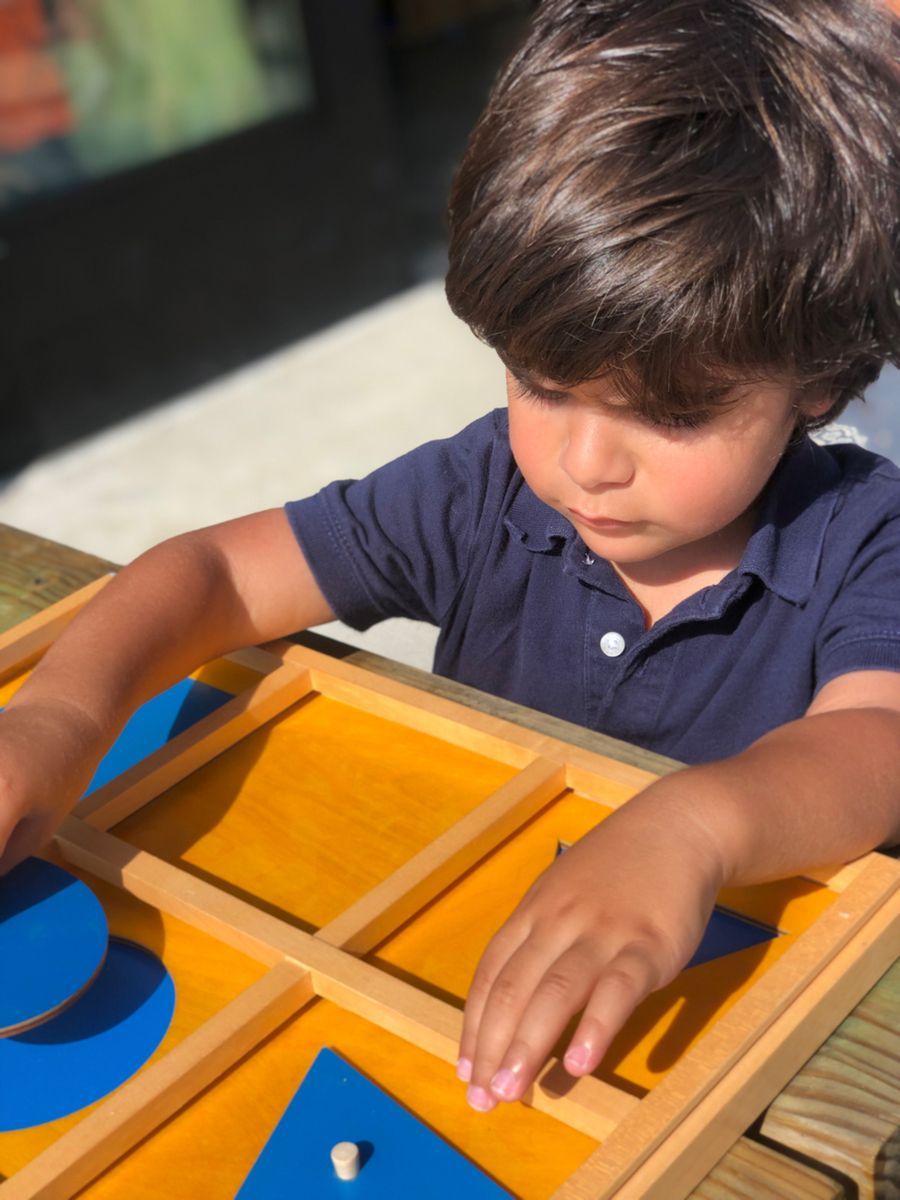
The Geometric Cabinet is one of the key sensorial materials in the Montessori classroom, designed to help children explore shapes, sizes, and spatial relationships. At first glance, it may seem like a simple set of shapes, but it is carefully designed to cultivate hands-on understanding of geometry. The Geometric Cabinet is a Montessori sensorial material consisting of a set of geometric shapes such as triangles, squares, circles, and polygons, carefully crafted to allow children to explore and compare shapes through touch and sight. The entire cabinet is made of wood and consists of 6 drawers or trays along with the introduction tray placed on the very top. Each shape is the same shade of blue and contains a central knob for the child to use when picking up the shape. The cabinet helps children build their geometric vocabulary, develop spatial awareness, and connect physical manipulation with abstract understanding.
Isolation of Quality
One of the core principles of the Geometric Cabinet is isolation of quality. Each material highlights one specific concept at a time, allowing the child to focus on a single property of shapes, such as the number of sides, angles, or symmetry, without distraction. By isolating these qualities, children are able to internalize geometric concepts clearly, forming a strong foundation for later abstract thinking in mathematics.
How the Child Works with the Geometric Cabinet
The child begins by removing shapes from the cabinet and tracing the outlines with their fingers, noticing the differences and similarities between forms. After experience tracing, the names of the shapes are given to the child, building their vocabulary and reinforcing the connection between the shape and its name. They may sort the shapes, match them, or pair similar forms, exploring each shape’s unique qualities. The hands-on experience allows children to connect movement with visual perception, helping them understand shapes physically as well as mentally.
Distance Games
After working with the shapes in the cabinet, children can extend their learning through distance games. For example, they might place on drawer on a rug, remove all the shapes and then place each shape on a different rug in another area of the classroom. The child then chooses one shape and places it in the correct frame in the drawer. The child can build upon this by using an indicator to mark which specific shape to find or adding multiple drawers. These activities reinforce the concept of shape and spatial relationships while allowing children to engage their whole body, making abstract ideas tangible and memorable.
Geometric Cards - Another Extension
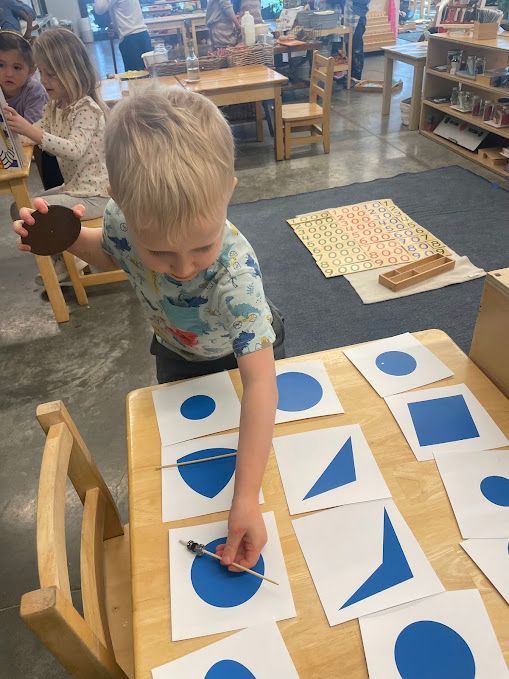
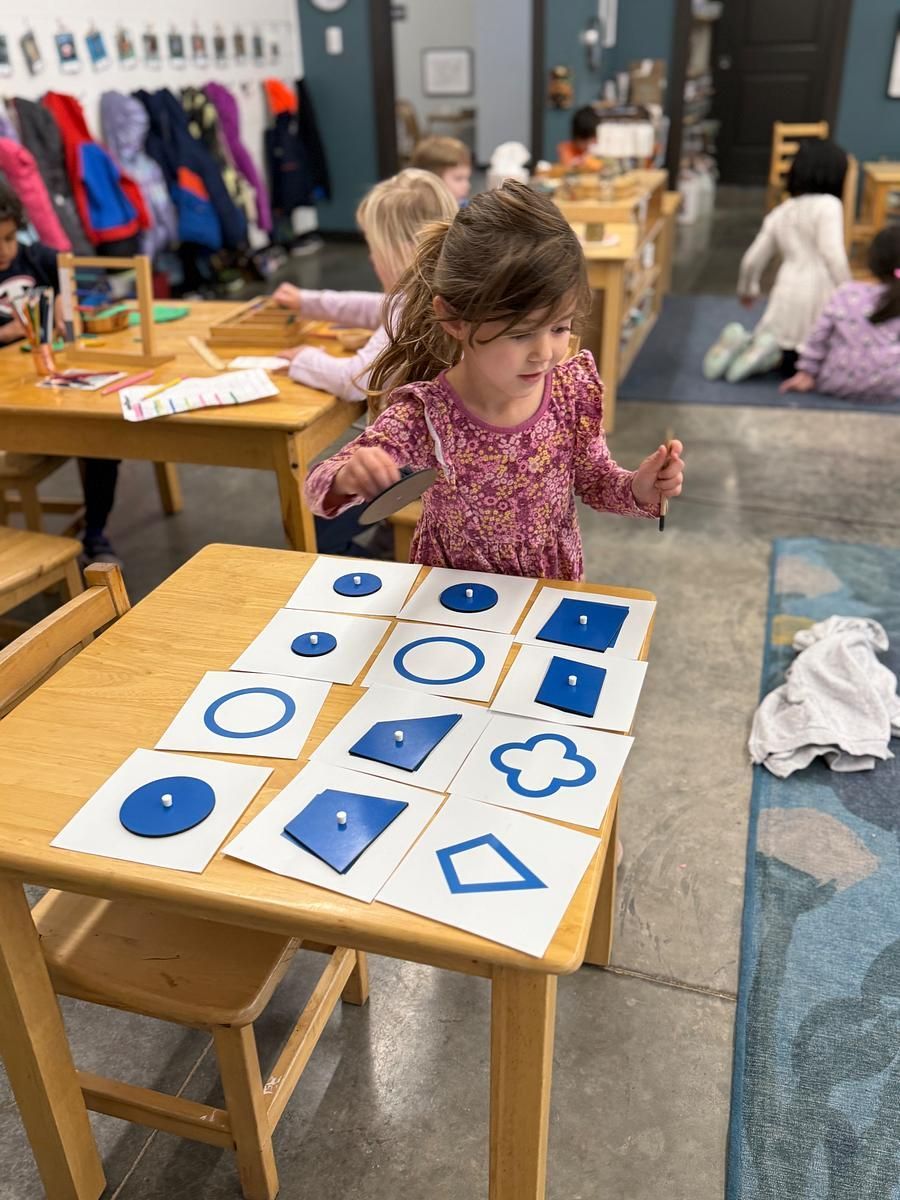
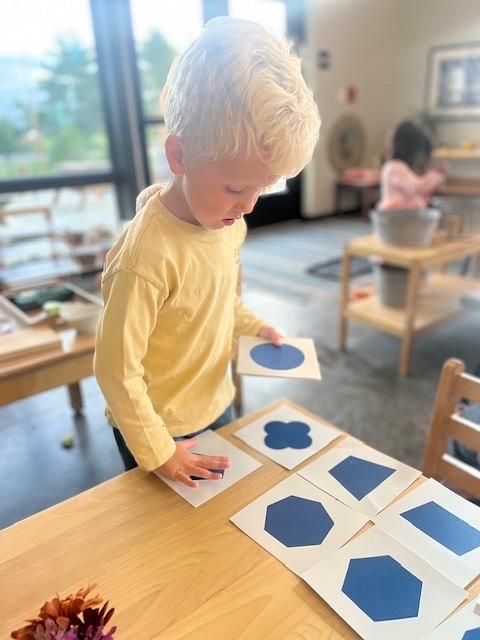
The Geometric Cards are a natural extension of the Geometric Cabinet. They consist of flat cards featuring the same shapes found in the cabinet and can be used for matching games, sorting activities, or memory exercises. There are three sets of cards: One set consists of each shape replicated as a solid shape; another set the shape is drawn as a thick line and the third set drawn as a thin line. Children can pair the cards with the corresponding shapes from the cabinet, reinforcing recognition and vocabulary. The cards also provide an opportunity for children to work independently or in small groups, explore patterns, and engage in visual discrimination exercises. This extension helps solidify the connection between tactile experience and visual memory, deepening their understanding of geometry.
Laying the Foundation for Geometry
By engaging with the Geometric Cabinet and its movement extensions, children begin to experience geometric concepts concretely before moving to abstraction. The isolation of quality ensures that each lesson is clear and focused, giving children a strong foundation for future mathematical learning. These activities also foster exploration, discovery, and joy in learning, helping children develop a natural understanding of geometry.
The Geometric Cabinet is more than a tool for learning shapes. It is a hands-on, experiential journey into the world of geometry. Through careful exploration and playful extensions, children develop both understanding and confidence, setting the stage for future success in mathematics.